
By guest contributor Ed Monk The world is more expensive, more divided, and more in need than many of us can remember…
Behind the paper: Writing a new national public health institute into law
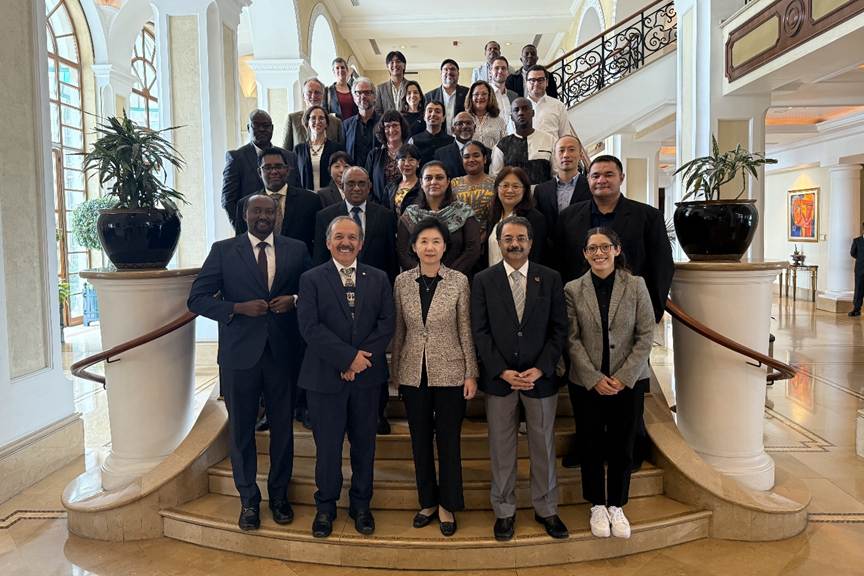
In this Behind the Paper post, Miyako Otsuka, Mio Kato, Takaji Wakita and Tomoya Saito discuss their PLOS Global Public Health article, “Legal design for establishing a novel parastatal public health institute – Japan Institute for Health Security: A case study.” The study was carried out as part of a multi-country research initiative on the governance of national public health agencies, supported by the Alliance for Health Policy and Systems Research and the WHO Health Emergencies Programme. Read the paper here: Legal design for establishing a novel parastatal public health institute – Japan Institute for Health Security: A case study
What led you to decide on this research question?
Through the experience of the COVID-19 pandemic, a great many countries arrived at the same conclusion: the way their public health response system was organised had to change. National public health agencies (NPHAs) — their functions, their structures, their place within government — became the subject of reform almost everywhere. Japan is one of those countries. On 1 April 2025 it established a new national institute, the Japan Institute for Health Security (JIHS), by merging the National Institute of Infectious Diseases (NIID), founded in 1892, with the National Center for Global Health and Medicine (NCGM).
When the Alliance for Health Policy and Systems Research and the WHO Health Emergencies Programme launched a multi-country research initiative examining how governance arrangements shape the performance of NPHAs, Japan was glad to raise its hand and join. Among the participating countries, our team chose to focus on laws and mandates — the legal design of the new institute. We made that choice because no comprehensive assessment existed of the legal frameworks built to support this institutional transformation. A good deal had been written about what JIHS would do; almost nothing about the statutes that made it possible.
Our three research questions followed directly from that gap. How did new and amended statutes define JIHS’s governance, goals and functions? What changes to public health governance resulted? And are the resulting authorities and processes now sufficiently clear?
Could you talk us through how you designed your study? What was important for your team as you put the study team together?
Since our work is about our own organisation, neutrality was the first design constraint rather than an afterthought, and two choices followed from it. First, the document review drew only on openly available sources: five pieces of legislation, two grey literature documents and eight government publications, covering February 2020 — when Diet members first urged the creation of a “Japan CDC” — through to the launch of JIHS in April 2025. Anyone can retrieve the same corpus and test our reading of it.
Second, we used purposive sampling for the interviews. Because several of our authors had themselves been part of the pandemic response, identifying the appropriate informants was relatively easy. Between 4 August and 2 September 2025 we spoke with eight key informants: one member of the National Diet who had been involved in the legislative deliberations, four senior officials of the Ministry of Health, Labour and Welfare, and three JIHS executive officers. The interviews were semi-structured and conducted in Japanese, lasting approximately 60 minutes each. After creating verbatim transcripts, the data were analyzed using Braun and Clarke’s six-step thematic analysis.
The research team itself was small but complementary: colleagues who had worked inside the pandemic response, colleagues who study institutional transformation, and colleagues with genuine strength in qualitative interview research. A small, well-matched team proved to be entirely sufficient for the work.

What challenges did you encounter during your study?
The difficult part was drawing out material from the interviews that would hold up as evidence. Our informants were senior figures, in some cases colleagues, and the risk in that situation is that one collects the official narrative rather than the reasoning behind it. For some time we were unsure how to elicit answers that were both candid and analytically valid. Advice from the Alliance team helped us to sharpen the interview guide, and we reorganised the questions around what only that particular informant could tell us. On the day, rapport proved relatively easy to establish: almost every informant already knew at least one of the interviewers. We opened with reminiscences of the pandemic years and then folded the questions in as the conversation moved, and that is probably why we were able to gather so many candid remarks. When we ran the thematic analysis on the verbatim transcripts, opinions of real analytical weight emerged — including several that cut against the tidy version of events.
Our other concern was the literature. There is surprisingly little scholarship on the legal dimension of this kind of institutional reform, and for a while we doubted whether what we could find would be sufficient. In the end the documents we had collected covered the ground. In retrospect, that is itself a finding about Japanese framework legislation: meaning is concentrated in a small number of authoritative texts, so a small corpus can carry a great deal of weight.

What did you find most striking about your results? How will this research be used?
Two things stood out.
The first was reassuring rather than surprising: the legal instruments needed to create the institute were, in fact, all in place. The JIHS Act and the associated amendments established JIHS as a Special Public Corporation (tokushu-hōjin), created mechanisms for both vertical and horizontal coordination — including formal mutual cooperation with prefectural and municipal public health institutes, which had previously rested on administrative notification alone — and embedded preparedness and research capacity as core elements of national health security. The Act also clarified the science–policy boundary. As one informant put it: “Experts advise, but the final accountability lies with government.”
The second was more striking. Almost every informant regarded the reform as only the beginning, and was clear that the hard, legal elements do not by themselves solve the problem. As in most mergers, the true challenge lies in the soft elements — organisational culture, identity and trust. “Law can merge institutions, but not people’s mindsets overnight,” one told us. Another described the task as “not just creating the box but putting soul into it,” and estimated that it would take some ten years.
We were also struck by how few key documents were involved. It is remarkable how sharply that small set of texts brings into relief what the pandemic exposed about Japan’s system, and what was legally required in response.
The findings are Japan-specific, but the model they describe travels: a tripartite governance arrangement in which political leadership, administrative coordination and scientific expertise are held in distinct but connected roles. On that basis we set out six recommendations for evaluating legal adequacy — including joint, multi-stakeholder assessment and simulation-based testing, aligned with the WHO JEE Tool 3.0 and the GHSA Legal Preparedness Action Package — which other countries reconfiguring their own agencies may find useful.
What further research questions need to be addressed in this area?
Our results show clearly that the laws and mandates were sufficient for the creation of a new public health institute. They also show that evaluation is now needed in the operational domain. Consistent with the nature of Japanese framework legislation, the JIHS Act delineates broad institutional parameters whose operational adequacy is calibrated through subordinate regulations and administrative practice — and it is precisely that sub-statutory layer that now needs to be assessed.
Three questions follow. Do the subordinate instruments translate legal mandates into workable practice for the people who actually implement them? How does the science–policy interface behave under crisis conditions, where our informants suggested the boundary is more porous than it appears on paper? And can organisational culture and inter-agency trust be evaluated, rather than merely asserted? Our own study captured the perspectives of those who designed the reform rather than those who must operate it; the next study should bring the implementers in.
Why did you choose PLOS Global Public Health as a venue for your article?
There were two reasons. The article is one output of the Alliance and WHO multi-country initiative, in which the participating country teams are publishing together in PLOS Global Public Health. Appearing in a single venue gives the country studies coherence and makes them far easier to read against one another — and, for us, it created a welcome sense of working as part of one shared effort rather than in isolation.
The second reason is the readership. What we had to convey is not, at heart, a story about an infectious disease; it is a story about governance in public health — how a statute defines an institution’s mandate, and how political leadership, administrative coordination and scientific expertise come to be arranged as distinct but connected roles. That is precisely the conversation PLOS Global Public Health hosts, and it is why this journal is the one that made our paper thinkable as a submission in the first place.
The views expressed in this post are those of the authors and do not necessarily reflect the official position of the Japan Institute for Health Security, the Ministry of Health, Labour and Welfare, or the World Health Organization.