
In this post, we speak to the authors of a recent PLOS Global Public Health article, “Crises are a perpetual restart” – a comparative…
PLOS Global Public Health Editor Spotlight: Tsitsi Masvawure
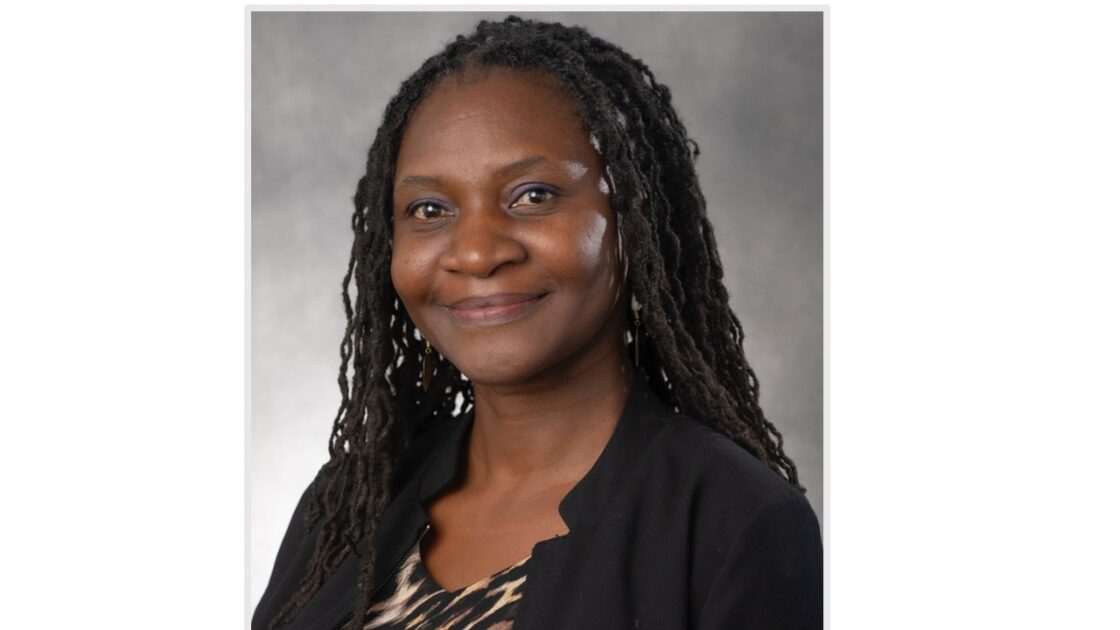
Tsitsi Masvawure is a medical anthropologist, global health researcher and feminist scholar, whose research focuses on issues of gender, sexuality and health. She is primarily interested in the HIV pandemic and have conducted research on HIV prevention and treatment in various countries in Africa and is a member of the PLOS Global Public Health Editorial Board in the Social, Behavioral, and Qualitative Research Section. In this interview, she discusses her research, views on open science, and experience collaborating with PLOS as a valued editor.
What background and expertise do you bring to PLOS Global Public Health?
My Ph.D. is in anthropology, with a specialization in medical anthropology. I also have training in public health having obtained a master’s degree in reproductive and sexual health from the London School of Hygiene and Tropical Medicine in the UK, and completed a postdoctoral fellowship at the HIV Center for Clinical and Behavioral Studies at Columbia University, New York. I use my theoretical and methodological background in anthropology and public health to engage with global health issues, more broadly. In addition, I have programmatic experience in HIV prevention; in the early 2000s’, I co-founded a university-based HIV prevention program in Zimbabwe and was responsible for implementing a gender equity and HIV program for students. This work included challenging toxic masculinities on university campuses, which led to various consultancy opportunities in the area of gender, sexuality, HIV and gender equality, more broadly. I have expanded my research beyond HIV prevention, to include HIB treatment, maternal health and menstrual wellbeing.
Why did you decide to become part of PLOS Global Public Health?
I was drawn by the “global health” aspects of the journal, which signaled to me that I would be reviewing and editing papers a wide range of paper that are multi and inter-disciplinary. In my mind, the name of the journal suggested that it would not be confined to one discipline, but would be a space for different disciplines to be in conversation with each other. This is rare. Additionally, I must confess, I was excited to be part of a journal whose Editor-in-Chief, Catherine Kyobutungi, is a woman from Africa. This is even rarer! I also loved the non-apologetic tone of the journal vis-à-vis its commitment to elevating the voices of historically marginalized populations and tackling inequities by publishing rigorous research studies. I have not been disappointed so far.
You have done a lot of fieldwork as part of your research; what’s been your most memorable experience? Do you have any upcoming fieldwork or other projects?
I love research! A decade ago I was involved in a maternal health evaluation project that required me to travel to rural Zambia and Uganda to collect data. Being on the ground and seeing for myself some of the challenges pregnant women faced was incredible. I had read the maternal health literature and read up on the project we were evaluating, but being on the ground for myself made me appreciate these challenges even more! In Uganda, for instance, women would leave the healthcare facilities after only a few hours of giving birth and get onto a motorbike with their newborns in their arms! This was incredible to see! I grew up in Southern Africa where motorbikes are not a common mode of transportation and considered very dangerous. I also remember being at a healthcare facility in rural Zambia and hearing the cries of pregnant women in labor. These were memorable experiences because I was able to infuse these observations into our data interpretation and make the reader see these women as humans rather than statistics. I am currently collecting data on menstruation and wellbeing at a college campus here in the U.S. We have collected a lot of qualitative and quantitative data and are currently analysing these data.
Do you have any tips for authors to strengthen their work?
I will offer three tips:
- First, do not assume that you know what study participants mean. If doing qualitative research you must ask people to explain what they mean. In quantitative research, you must pre-test your questions to ensure that you collect the right data. I have seen this become a major problem during data analysis when we can’t decode what people mean because we either did not probe or we had poorly worded questions!
- Second, do not take your study participants for granted. For many of us, research is our job and it can become easy to take study participants for granted. However, we must remember that when people participate in our studies, they are doing us a favor rather than the other way round. We should therefore treat study participants with respect and treat the data we collect from them with respect. This means being very mindful about how we interpret and write up the data we collect. A lot of (epistemic) violence is committed when we write up our study findings for publication.
- Third: I would like to encourage authors to take the time to explain what their study findings mean. A multi-disciplinary journal like PLOS Global Public Health has a diverse readership and it is important to simplify our discipline-specific jargon so that our papers are accessible to more people. I see this a lot in quantitative papers where authors will report their statistical data (e.g., odds ratios, co-efficient correlations etc) but not explain what it means. This can be done easily in one sentence.
Do you have anything else you’d like to add?
I have been impressed by the breadth of papers being submitted and published to PLOS Global Public Health. The journal seems to have opened up a much needed space for decolonial and evidence-based activist scholarship, which I appreciate greatly. The journal also has a healthy mix of quantitative and qualitative research, which is important for breaking down the hegemony of quantitative research. Finally, PLOS Global Public Health is now one of the first journals I look at when I am trying to diversify and decolonize my citational practices.
Disclaimer: Views expressed by contributors are solely those of individual contributors, and not necessarily those of PLOS.