
In the final ‘Community Case Studies’ blog of 2025, PLOS Mental Health speaks with Sandy Sinn, who is the founder of the…
Getting to know PLOS Mental Health: Welcoming Section Editor Cristian Montenegro

Image credit
Pixabay
In our latest ‘Getting to know PLOS Mental Health‘ blog, we are delighted to welcome our newest Section Editor – Dr Cristian Montenegro. Cristian will help to lead our ‘Socio-economics and Political Approaches’ section alongside Dr Soumitra Pathare and Dr China Mills. Cristian tells us about his interests, expertise and hopes for the journal.
Please tell us a little about yourself
[CM]: I am a Senior Lecturer in Critical Global Health at the Department of Global Health and Social Medicine, King’s College London, and an affiliate of the King’s Brazil Institute and King’s Global Health Institute. My research examines the social and political dimensions of mental health policy in Latin America and globally, with a focus on human rights, democracy, and community participation. I have a background in sociology, community psychology and public health. Before joining King’s, I held positions as Senior Research Fellow at the Wellcome Centre for Cultures and Environments of Health (University of Exeter) and Assistant Professor at the Pontificia Universidad Católica de Chile.
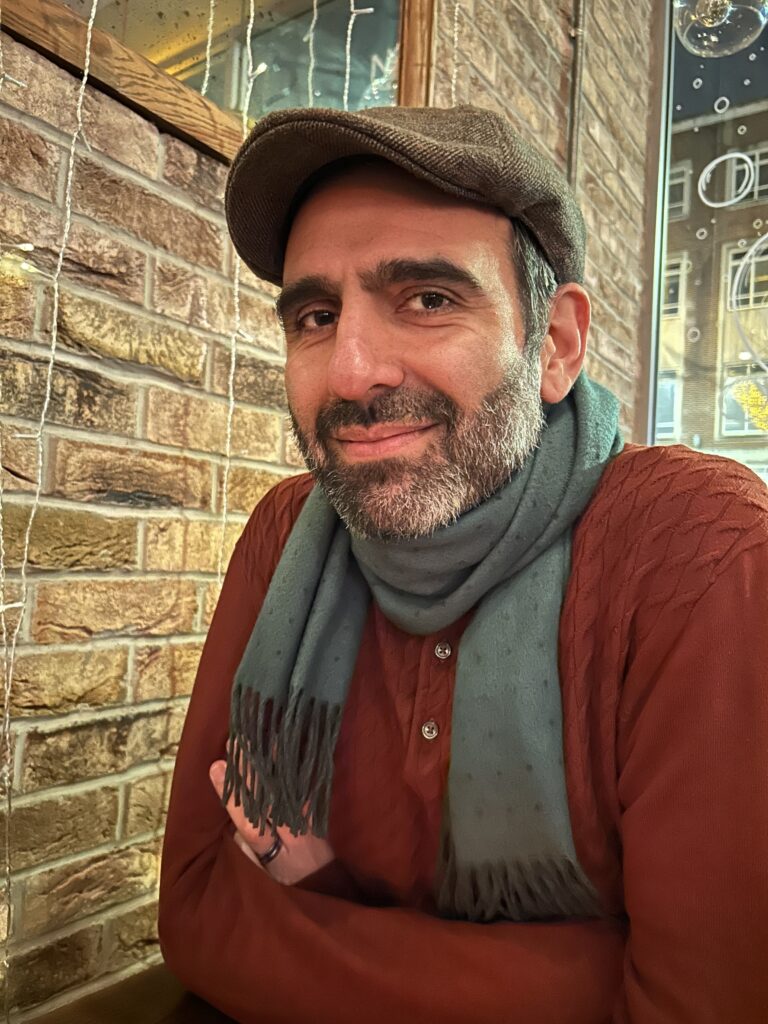
Image credit
Cristian Montenegro
What are your main areas of interest?
[CM]: My work explores the values and politics embedded in mental health systems and reform processes. I have published on service-user and survivor movements, the politics of knowledge production in global mental health, and the frictions between international frameworks and local practices. I’m particularly interested in how concepts such as “community,” “participation,” and “human rights” are interpreted, mobilised, and transformed across different political and cultural contexts, and how these meanings shift over time. Much of my research is grounded in Latin America, where I examine these dynamics in relation to broader questions of democracy, inequality, and social change.
Why did you agree to join PLOS Mental Health as a Section Editor?
[CM]: I have followed the journal’s development with great interest. I value PLOS Mental Health’s commitment to elevating the voices of lived experience and to promoting transformative approaches beyond the mainstream of global mental health. I am also excited to support a platform that connects diverse disciplines and geographies and challenges structural barriers in the field.
What kind of submissions would you like to see in the Socio-Economics section / what are the most pressing questions in your field at the moment?
[CM]: I would like to see submissions that examine the social, economic, and political dimensions of mental health. I’m particularly interested in work that is theoretically bold, research that explores mental health as a cultural and social force shaping contemporary life beyond the clinic and also beyond policy. For example, how do mental health discourses and aspirations inform our hopes and fears around new technologies like AI?
I’m particularly interested in work that is theoretically bold, research that explores mental health as a cultural and social force shaping contemporary life beyond the clinic and also beyond policy.
I’m also keen to engage with research that interrogates the relationship between mental health systems and political instability. Do our heightened sensitivities toward mental health today offer any kind of resistance to rising authoritarian populism, or are they being co-opted in new ways? These are urgent questions that demand interdisciplinary, historically informed, and globally grounded responses.
I am particularly keen to see the journal continue to publish work by early-career researchers and authors based in low- and middle-income countries, especially work that does more than document local realities, but instead uses those realities to shape global debates and challenge dominant frameworks.
We are really looking forward to seeing how Cristian influences our journal and continues to influence the field. As ever, we are extremely grateful to all of our Section Editors, as well as our co-EiCs, Academic Editors, Authors, and Reviewers for shaping PLOS Mental Health.