
In this post, we speak to the authors of a recent PLOS Global Public Health article, “Crises are a perpetual restart” – a comparative…
Welcoming Professor Manuela De Allegri as the New co-Editor-in-Chief of PLOS Global Public Health
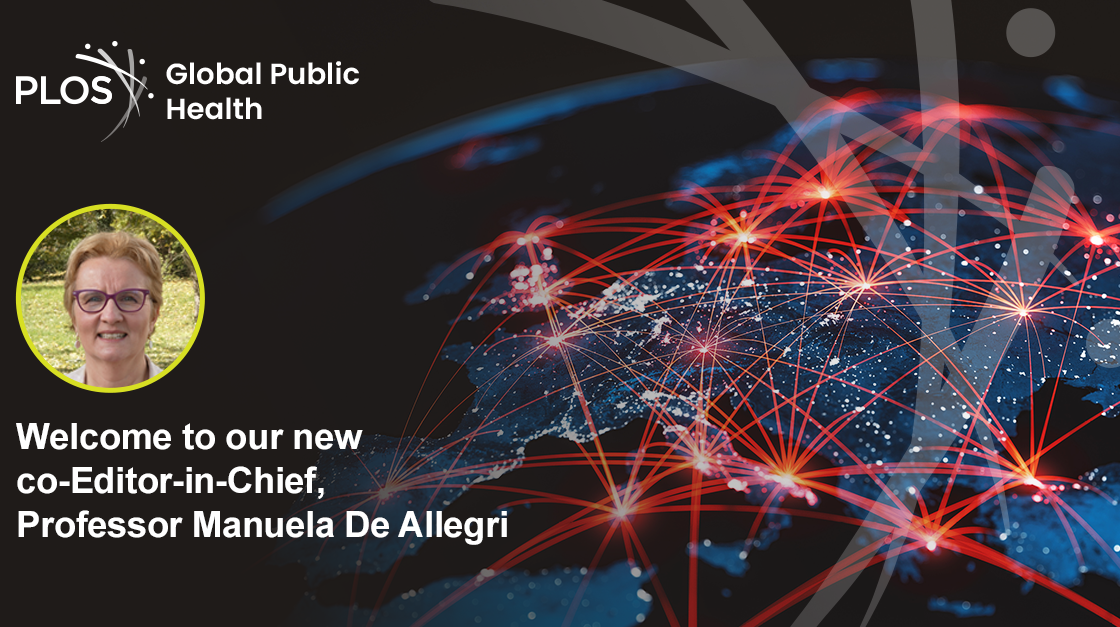
PLOS Global Public Health is proud to welcome Professor Manuela De Allegri as the journal’s new co-Editor-in-Chief. A distinguished scholar and global health leader, Professor De Allegri brings decades of experience in health systems research, equity-driven inquiry, and capacity strengthening across diverse global contexts. Her appointment marks an important new chapter for PLOS Global Public Health as the journal continues to advance its mission to amplify diverse voices and drive evidence-based action for health equity worldwide. She joins Dr. Catherine Kyobutungi, one of the journal’s founding Editors-in-Chief.
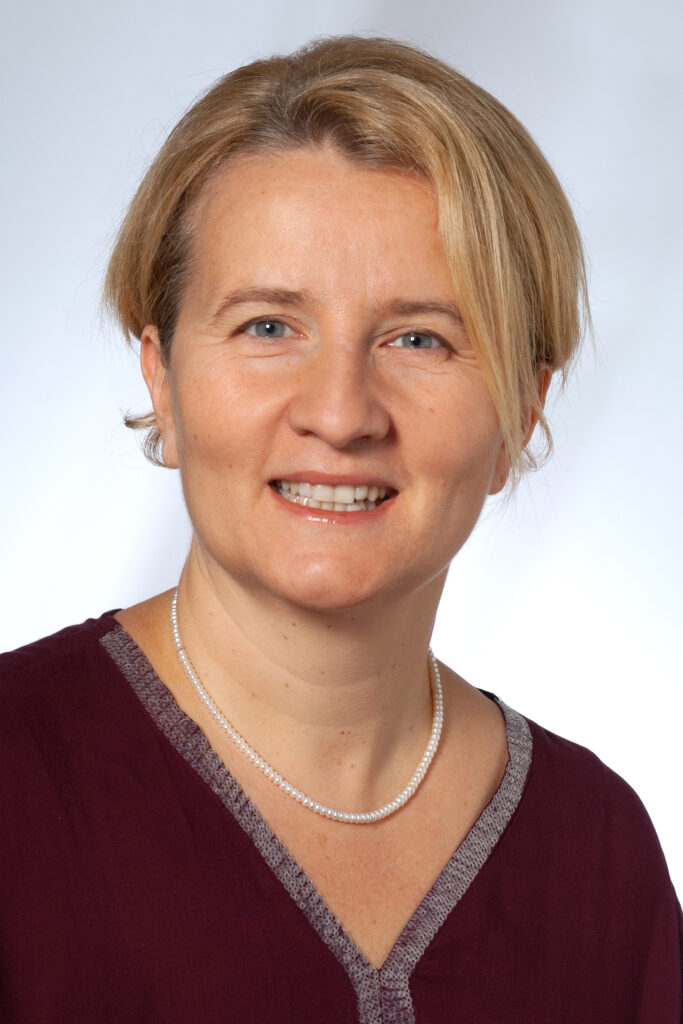
A Career Grounded in Evidence, Equity, and Impact
Professor De Allegri is based at the Heidelberg Institute of Global Health (HIGH) at Heidelberg University, where she leads a dynamic portfolio of research and mentorship focused on improving the performance, accessibility, and fairness of health systems globally. With training in health economics and social sciences, her work sits at the intersection of evidence-based policy, implementation research, and social justice.
Over the past two decades, Professor De Allegri has collaborated with governments, NGOs, and academic institutions across Africa, Southeast Asia, and Latin America to address complex questions around how health systems can equitably serve populations in need. Her research explores topics such as health financing reforms, maternal and reproductive health, and the evaluation of large-scale health interventions using both quantitative and qualitative approaches.
A hallmark of her work is her commitment to methodological integration and contextual understanding — pairing statistical rigor with community insight. “We cannot separate evidence from experience,” she has said. “Public health must be both scientific and human.” This holistic approach reflects the very ethos of PLOS Global Public Health — that science must serve people, and that meaningful progress in health equity requires both data and dialogue.
A Vision for Equitable and Inclusive Global Health Publishing
As Editor-in-Chief, Professor De Allegri brings to PLOS Global Public Health a clear vision for how the journal can continue to challenge inequities in academic publishing while upholding the highest standards of scientific integrity. Her leadership will build upon the journal’s founding principles — openness, inclusion, and collaboration — to further reimagine what equitable global health scholarship can look like.
“Equity is not a byproduct of good science — it is the foundation of it,” she emphasizes. “For research to make an impact, it must reflect the diversity of the people and places it seeks to serve.”
Under her direction, PLOS Global Public Health will continue to expand efforts to:
- Strengthen regional representation among authors, reviewers, and editorial boards, to highlight research from all over the world.
- Encourage a diversity of research methods, including mixed-methods, participatory, and implementation science approaches that reflect real-world health systems challenges.
- Advance open and transparent science, ensuring that research outputs remain freely accessible to all communities that can benefit from them.
Professor De Allegri’s own research and mentorship embody these principles. She has worked tirelessly to support early-career researchers across Africa, Asia, and Latin America, advocating for equitable authorship practices, sustainable research partnerships, and mentorship models that foster independence and leadership. Her commitment to creating inclusive academic spaces mirrors the journal’s mission to amplify underrepresented voices and decolonize global health publishing.
Building on Strong Foundations
Since its launch, PLOS Global Public Health has become a leading platform for evidence and insight on the world’s most pressing health challenges — from pandemics and planetary health to reproductive justice and social determinants of health. The journal’s commitment to open access and equity has made it a vital space for researchers, policymakers, and practitioners to share knowledge that can inform real-world change.
As she steps into the role of co-Editor-in-Chief, Professor De Allegri aims to build on this foundation while charting new directions for the journal’s growth. She envisions PLOS Global Public Health as both a scientific journal and a global movement — one that embodies the values of transparency, solidarity, and mutual learning.
“In global health, progress depends not only on the evidence we produce, but on how we produce it,” she reflects. “By embracing openness, diversity, and humility, we can ensure that our science truly serves the public good.”
Looking Ahead
The PLOS community warmly welcomes Professor Manuela De Allegri to her new role. Her appointment signals a powerful alignment between the journal’s founding values and her lifelong commitment to evidence-based, equity-driven public health. Together with our global editorial board and contributors, she will help guide PLOS Global Public Health into its next phase — one that deepens its impact, broadens its reach, and continues to challenge the status quo in global health publishing.
Under her leadership, PLOS Global Public Health will remain what it has always aspired to be: a home for diverse perspectives, a champion of open science, and a force for global health equity.