
In the latest ‘Journeys in Mental Health’ blog from PLOS Mental Health, an anonymous contributor shares their reflections on their childhood and…
PLOS Mental Health Community Case Studies: Choosing Hope to Prevent Suicide

Image credit
PLOS
In the final ‘Community Case Studies’ blog of 2025, PLOS Mental Health speaks with Sandy Sinn, who is the founder of the Center for Positive Psychology and Wellbeing, and lead of the Choose Hope initiative, which focuses on youth mental health and suicide prevention in schools and communities across Asia. Sandy is also a mother of three and a certified LivingWorks ASIST and safeTALK Master Trainer. She blends strengths-based parenting, lived experience, and evidence-informed practice to equip families and educators with practical, life-saving skills. We hear from Sandy about how these initiatives send a powerful message: Together, we can prevent suicide in young people.
Content Warning: This blog post discusses the topic of suicidality. Please only engage with the content if you are comfortable doing so and please seek professional help if you are affected by any of the topics discussed.
Please tell us about yourself.

[SS] My work sits at the intersection of grief, hope, and youth mental health. It began with losing people I love to suicide, then realising how many young people, families, and educators feel alone and unprepared when suicidal distress shows up in their lives. Over the last few years, I have focused on walking alongside schools and communities in Hong Kong and across Asia to make conversations about suicide safer and more possible. I am the founder of the Center for Positive Psychology and Wellbeing (CPPWB) and lead its Choose Hope initiative, while also working as a strengths-based parenting coach and youth mental health educator supporting families, schools, and community organisations.
What is ‘LivingWorks’ and what is your role within that?
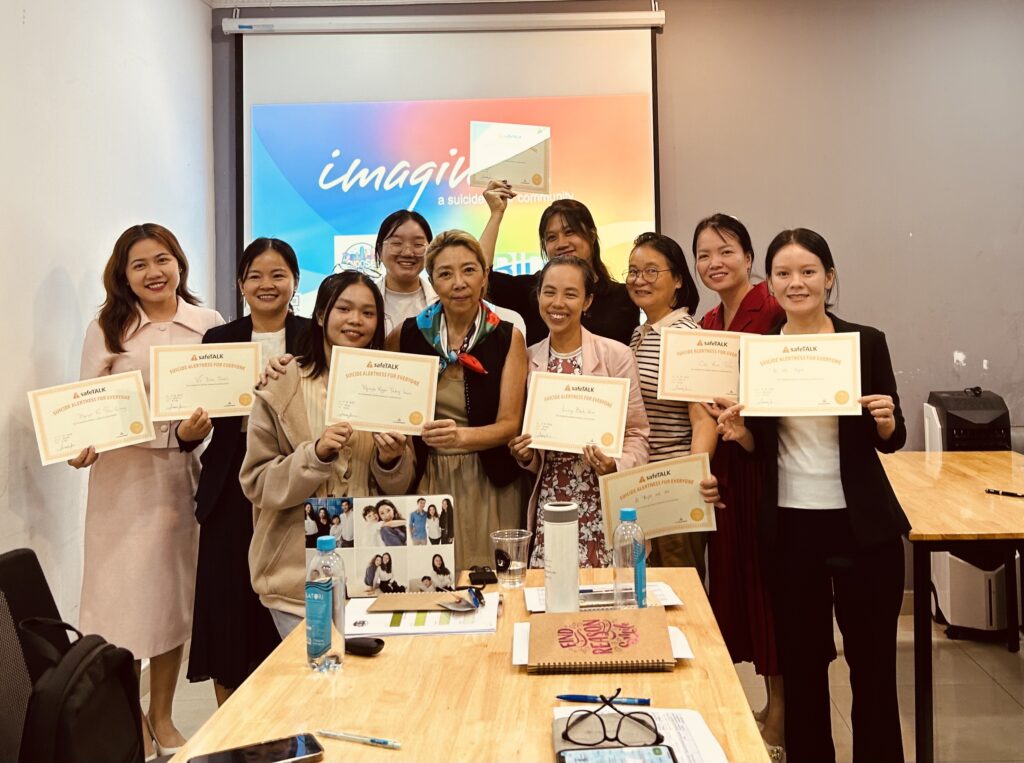
[SS] LivingWorks is a global leader in suicide prevention training that has spent more than four decades developing and refining evidence-informed programs to keep people safer from suicide. Its workshops, including the two-day Applied Suicide Intervention Skills Training (ASIST) and the half-day safeTALK, are designed to equip ordinary people, not just mental health professionals, with practical skills to recognise suicide risk, ask directly about suicide, and help keep someone safe while connecting them to further support. As a certified LivingWorks ASIST and safeTALK Master Trainer, my role is to bring these programs into local schools, parent groups, and organisations so that suicide safety becomes a shared capability in the community, not a specialist secret.
What is Choose Hope and how did it come about?
[SS] Choose Hope is an initiative under the Center for Positive Psychology and Wellbeing that focuses on building networks of safety around young people through training, talks, and community-based programs. It was born from listening to young people who said that when suicidal thoughts show up, it can feel as if there are only two options: live or die. Choose Hope offers a third option: in this moment, choose hope long enough to keep yourself safe, and together we will work on the problems that feel unbearable right now, whether they are about academics, bullying, identity, family, or relationships.
For the community, Choose Hope also carries another message: suicide is preventable, or we would not have suicide first aid skills training at all. The existence of these skills is itself a reminder that there is something we can do, and that is, in its own way, profoundly hopeful.
How does Choose Hope change the narrative on suicide?
[SS] Choose Hope challenges the idea that suicide is only a dark, untouchable subject and instead frames it as a place where hope and action are still possible. For young people, it says clearly: suicidal thoughts are not a personal failure, they are a signal that you deserve care, connection, and practical support, and you do not have to face them alone.
For adults and communities, it shifts the narrative from fear and silence to responsibility and readiness, by equipping people with skills to notice distress, ask directly about suicide, and stay alongside a young person while connecting them to further help. In this way, conversations about suicide become conversations about safety, dignity, and shared courage.
[Choose Hope] shifts the narrative from fear and silence to responsibility and readiness
What advice would you give to anyone who is concerned about a young person’s mental health?
[SS] If you are worried about a young person, remember that suicide kills and keeping them safe has to take priority over feeling awkward, uncertain, or afraid.
Many people (including helping professionals) hesitate to ask about suicide because of all the “what ifs”: what if I am wrong, what if I make it worse, what if they say yes and I do not know what to do next. The reality is that “I am so glad I was wrong” is a far better outcome than staying silent and never knowing, and it can help to hold on to the idea that you would rather risk a difficult conversation than risk losing a friend.
Start with what you notice: changes in mood, sleep, social withdrawal, comments about being a burden and name these gently, then give the young person space to talk without rushing to fix or judge. Listening is the key. If you are concerned about suicide, ask directly and calmly; research shows this does not put the idea into their head, but it can reduce their sense of isolation and open a door to help. Most importantly, do not carry this alone: involve other trusted adults, follow school or community safety plans where they exist, and link in with mental health or crisis services so that the young person has a small team (a support network) around them, not just one exhausted caregiver trying to hold everything
What is the one thing that you think needs to change the most in suicide prevention in the next decade?
[SS] In the next decade, suicide prevention needs to become something that is not only held by specialists, but shared by whole communities in the places young people actually live their lives: schools, families, online spaces, faith communities, and cultural networks. That means investing earlier and more consistently in gatekeeper training, youth-informed programs, and culturally grounded approaches that reduce stigma and make it feel safer to ask for help before a crisis point. It also means centering lived experience including young people and carers who have navigated suicidal distress, in research, policy, and program design, so that systems are shaped by the people most affected, rather than speaking for them from a distance.
We thank Sandy for taking the time to share her personal experiences and important work with PLOS Mental Health. Sandy’s work, and the work of many across the globe, are fighting the stigma surrounding suicidality. By carefully bringing the topic into the open, we create opportunities for understanding, which will have ripple effects for those who are supporting others and for those in need of support. PLOS Mental Health will continue to normalize conversations surrounding suicide through our blogs, seminars and published content, which you can explore here.
Disclaimer: The perspectives shared above are those of Sandy Sinn and do not necessarily reflect the perspectives of PLOS or any of its affiliated journals or editors. Please also note that we are sharing it for awareness purposes as opposed to it being presented as an alternative to any professional advice that you may have received.