

In this post, we speak to the authors of a recent PLOS Global Public Health article, “Crises are a perpetual restart” – a comparative…
Reflecting on 2025: Highlights from PLOS Global Public Health (Part 2)
By Julia Robinson, Executive Editor, PLOS Global Public Health
Yesterday, I had the great pleasure of highlighting some of the wonderful Front Matter content (Reviews, Essays, and Opinions) that PLOS Global Public Health published this year, and it was a real treat to revisit pieces that have shaped the global health community’s way of thinking about the present moment, persistent challenges, and new futures that we can all create together.
Today I’m going to highlight some of the wonderful Research Articles that we’ve published, and in scrolling back through the months, there were some common themes that bubbled through:
- Equity and justice are central. Research increasingly centers social determinants, structural barriers, human rights, and systemic inequities — not just disease metrics.
- Diverse geographies, diverse challenges. From challenges that come from climate change, displacement due to conflict or war, impacts from the commercial determinants of health, or occupational exposures in industrial settings, the journal’s 2025 output reflects the full spectrum of global health contexts.
- Methodological breadth. Quantitative epidemiology, mixed-methods, implementation science, cost–effectiveness studies, and qualitative analyses are all essential tools, enabling nuanced, context-sensitive insights.
- Emerging health threats and shifting burdens. Noncommunicable diseases, environmental risks, chronic exposures, and grappling with how AI is shaping public health have all been common topics.
Below are some of our most-viewed and cited articles:
Adolescents’ screen time displaces multiple sleep pathways and elevates depressive symptoms over twelve months
This study, by Sebastian Hökby, Jesper Alvarsson, Joakim Westerlund, Vladimir Carli, and Gergö Hadlaczky, found that excessive screen time among adolescents negatively impacts multiple aspects of sleep, which in turn increases the risk of depressive symptoms — particularly among girls. It demonstrated that screen time and internet time can deteriorate sleep within three months, in at least four central aspects simultaneously: sleep quality, duration, chronotype, and social jetlag. Given the potential impacts in learning, mental health, and social development, this study adds valuable insight and has already provided evidence for further research and policy development. (With thanks to Academic Editor Sok King Ong for handling this paper through peer review.)
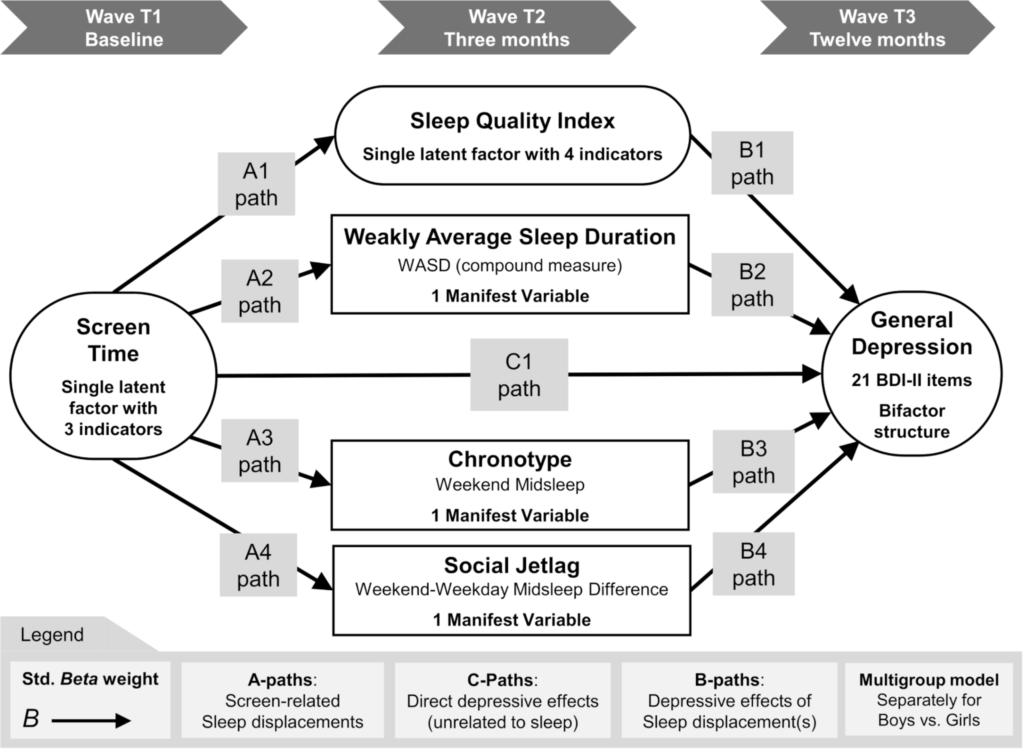
Fig 1. Simplified Structural Equation Model (SEM).
Occupation, displacement, and violence in the West Bank: A retrospective analysis of data from 2014–2024
We published quite a bit about the ongoing humanitarian crisis in Gaza this year, and this study, by Sarah Aly, Fatima Mossolem, Ayeh Khalil, Tushara Surapaneni, Abd Al-Rahman Traboulsi, Waleed Aldadah, Eleanor Reid, and Shakoor Hajat,analyzes ten years of data (2014–2024) to assess how Israeli military and land occupation in the West Bank is associated with Palestinian displacement, injuries, and deaths. It finds that Palestinians experience dramatically higher rates of conflict‑related fatalities and injuries than Israelis, with refugee camps and certain governorates (notably Jenin and Nablus) facing the greatest burden. Since October 2023, deaths, injuries, demolitions, and displacement in the West Bank have risen sharply above expected levels, underscoring escalating violence and humanitarian risk. (With thanks to Academic Editor Nora Gottlieb for handling this paper through peer review.)
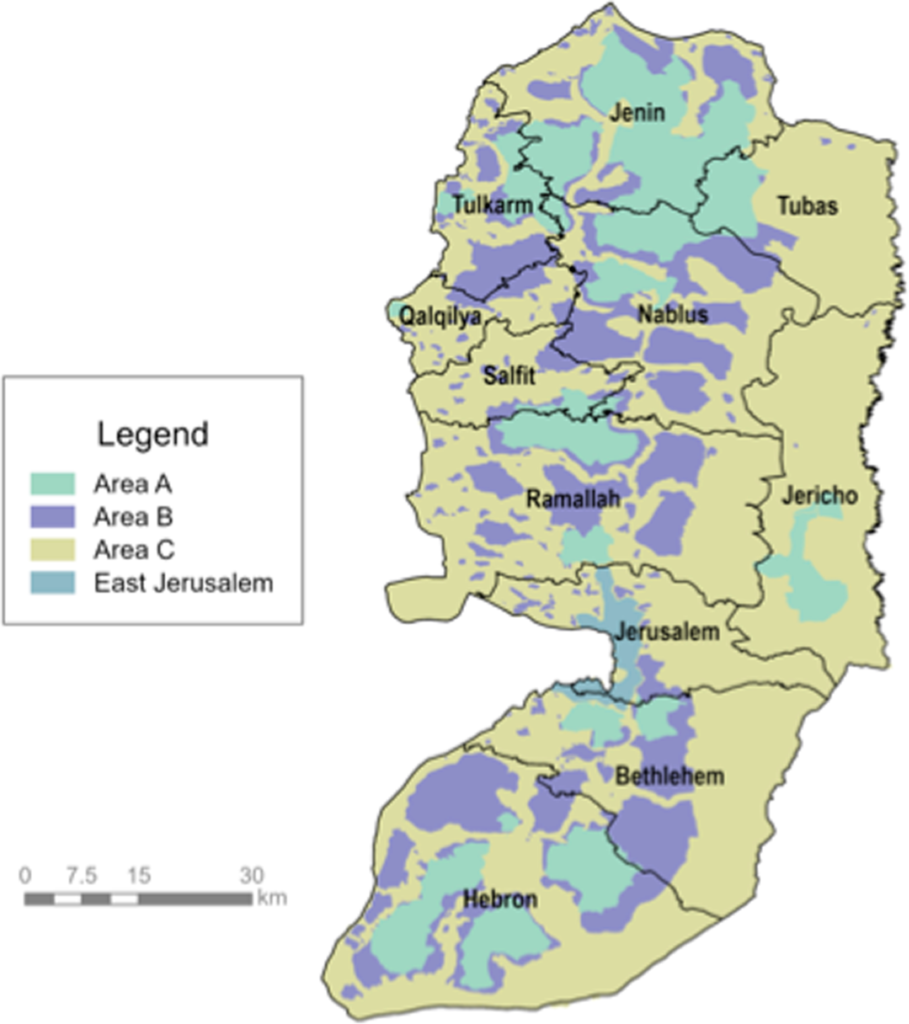
Fig 1. Map of West Bank.
Planetary health for health systems: A scoping review and content analysis of frameworks
I really liked this paper, which was written by Section Editor Nicole Redvers, Kyla Wright, Jamie Hartmann-Boyce, Sarah Tonkin-Crine, which identifies existing planetary health–related frameworks designed to guide health systems toward environmental sustainability and climate resilience. Reviewing 26 articles, the authors find that most frameworks are conceptual, vary widely in scope, and cluster into six major domains—including health system–environment interactions, leadership and vision, structural components, climate‑resilient infrastructure, sustainable technologies, and accountability mechanisms. They conclude that more region‑specific, operational, and inclusive frameworks—especially those incorporating biodiversity and Indigenous knowledge—are needed to support meaningful planetary health transformation in health systems. It’s a really useful paper to help guide future research and policy for the interconnectedness of planetary health and the intricate health systems needed to improve health outcomes. (With thanks to Academic Editor Connie Cai Ru Gan for handling this paper through peer review.)
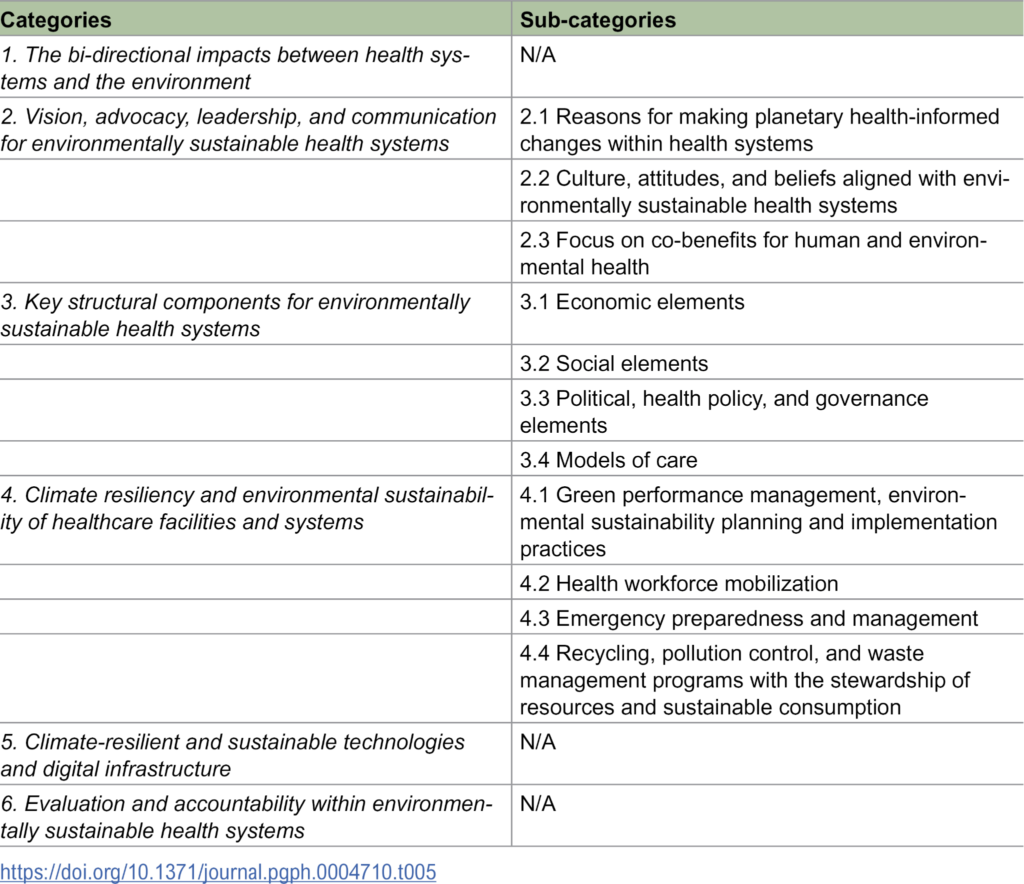
Table 5. Overview of the categories and sub-categories identified within the included planetary health-related frameworks.
Universal health coverage—Exploring the what, how, and why using realist review
The last pick for some of our highest-viewed articles of the year was this excellent paper from authors Aklilu Endalamaw, Tesfaye Setegn Mengistu, Resham B. Khatri, Eskinder Wolka, Daniel Erku, Anteneh Zewdie, Yibeltal Assefa. This realist review clarifies what Universal Health Coverage (UHC) means, why it matters, and how it can be implemented across different contexts. It finds that UHC is often inconsistently defined but fundamentally centers on equity, financial protection, and comprehensive service coverage, supported by mechanisms such as health insurance, social protection, digital systems, primary care strengthening, and political commitment. The authors conclude that while UHC is essential for improving population health and reducing inequality, its implementation remains uneven and requires stronger political will, clearer definitions, and sustained investment to become truly universal. Another important, policy shaping piece and I’m really pleased to see it being picked up in subsequent research and policy documents. (With thanks to Academic Editor Rajesh Sharma for handling this paper through peer review.)
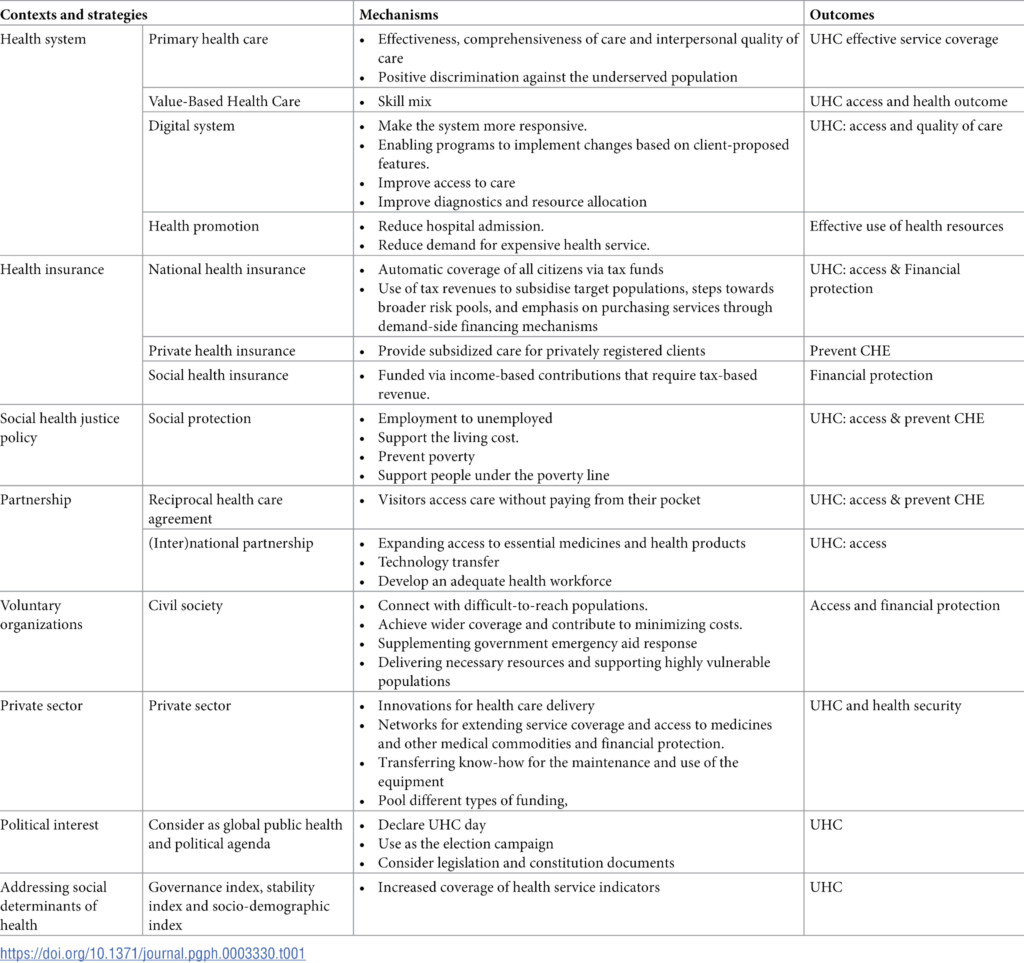
Table 1. The contexts, strategies, mechanisms, and outcomes in implementing UHC.
Believe me when I say that this is SUCH a small sample of the wonderful work that was published in the journal this year – as of this writing (Dec 19), we’ve published 974 Research Articles, which span the beautiful breadth of our wide ranging scope. I personally take great inspiration from the passion, dedication, and commitment that the PLOS GPH community shows every day to improving the quality of life for people all over the world. I hope you’ll take a good look around at our archives – I’m confident that you’ll learn something new, be challenged to think about a persistent health problem in a new way, or find a strategy that could be adapted elsewhere for positive change.
As ever, thank you to the global community of authors, Academic Editors, Section Editors, reviewers, and readers from all over the world. It’s a real honor to support a platform that is committed to – as our mission states:
…amplify the voices of underrepresented and historically excluded communities in all regions of the world and prioritize equity, diversity, and inclusion at all levels – editors, editorial boards, peer reviewers and authors – to broaden the range and diversity of perspectives at the forefront of public health and advance the health of all humankind.
Here’s to 2026 and beyond!