

By guest contributor Ben Ramalingam In 1982, Sri Lanka was hit by a major measles epidemic: 13k cases. The measles vaccine wasn’t…
Behind the paper: “Crises are a perpetual restart” – a comparative analysis of maternal and newborn health political prioritization across four fragile and conflict affected settings
In this post, we speak to the authors of a recent PLOS Global Public Health article, “Crises are a perpetual restart” – a comparative analysis of maternal and newborn health political prioritization across four fragile and conflict affected settings, written by Mamothena Carol Mothupi, Teresia Macharia, Katja Starc Card, Rosine Bigirinama, Alicia Adler, Maryan Abdulkadir Ahmed, Abdirisak Dalmar, Rifkatu Aimu Sunday, Sussan Israel-Isah, Kon Paul Alier, Naoko Kozuk, and Paul Spiegel.
What led you to decide on this research question?
As part of a larger consortium conducting research on maternal and newborn health (MNH) in conflict-affected settings –including South Sudan, Somalia, Northeast Nigeria, and Eastern Democratic Republic of Congo (DRC)—we recognized the need to better understand how and why MNH is, or is not, prioritized in these crisis-affected contexts. Given the burden of maternal and newborn mortality in these settings, we knew it was important to understand factors that shape policy decisions, budget allocations, and overall attention to MNH. In response, our consortium partners co-designed qualitative studies examining the policy, stakeholder, and contextual factors influencing MNH prioritization and policy implementation across each of the four countries respectively. These country studies generated rich, context-specific insights offering valuable lessons for policymakers and implementers looking to strengthen national strategies and address MNH policy and practice gaps.
As the research continued, issues related to politics and political will repeatedly surfaced as major factors influencing whether MNH received adequate attention and investment. Recognizing this as a cross-cutting theme, we decided to revisit the data with a comparative lens looking across all four contexts. This analysis highlighted how political dynamics—like those related to power, governance, and commitment—can either facilitate or hinder MNH prioritization in humanitarian settings. These findings provide practical lessons for advancing MNH agendas in similarly fragile environments.
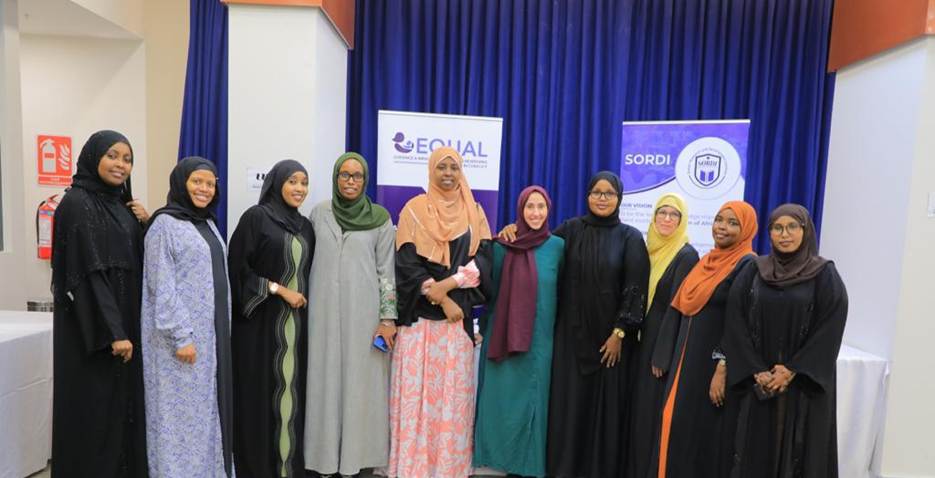
Some of the members of the EQUAL Consortium at a dissemination event in Somalia which was attended by Ministry of Health and other MNH stakeholders in December 2023. Photo by Mamothena Mothupi.
Could you talk to us through how you designed your study? What was important for your team as you created the study team?
Due to the focus on the political prioritization, we began by identifying conceptual frameworks that could help draw nuanced insights from the 80-plus interview transcripts collected across the four country studies. We found the political prioritization framework developed by Shiffman and Smith 2007 particularly useful for guiding our analysis. This framework allowed us to extract data related to power dynamics and the ideas of the multiple health actors that are involved in these humanitarian settings, including government, national and international organizations. The framework also highlights how the issue is framed, as well as political context in terms of opportunity for change, and governance structures. Once we agreed on the framework, we conducted the analysis collaboratively with representation of the original case study researchers from each of the original country contexts. Ensuring diverse input across contexts was a priority for our team, with each researcher bringing unique contextual understanding and perspectives to the interpretation of findings. To facilitate this, we organized a series of virtual and in-person workshops at key stages of the process to refine the codebook, discuss emerging themes, and validating interpretations collectively. This approach overall helped to strengthen the rigor of our analysis.
What challenges did you encounter during your study?
During primary data collection, security was one of the most common challenges encountered. In Nigeria, for example, it was the first time our Abuja-based team conducted field work in Yobe State. Ensuring the safety and security of our researchers was our top priority and we only proceeded with data collection when all necessary security arrangements were made. Similarly, in the DRC, conflict broke out in North Kivu soon after data collection was completed. While our team was safe, we reflected on how the renewed outbreak of conflict would affect the relevance of our results. We validated our findings through stakeholder consultation and dissemination activities to ensure continued relevance. This persistent challenge of an uncertain conflict situation also reflects a central theme of this paper, where each crisis makes you reassess what you know and how to move forward.
Cultural, social and religious barriers were also evident during data collection. In some settings where social interaction between unrelated men and women was restricted, we invested in stakeholder engagement and clear consent processes to ensure participants understood the purpose of our research and felt comfortable engaging. The political nature of some of the discussions meant that we also had to build trust and help key informants understand how we were going to use data and the intended research outcomes. Language and collaboration dynamics added an additional layer of complexity – for our study in DRC, working within a predominantly English-speaking consortium required careful attention to translation and interpretation. This meant several cycles of analysis to draw out nuances in both French and English.
When it came to the comparative analysis, developing a systematic way to not only conceptualize the study but also identify similarities and differences was challenging. The classifications of fragility, the typology of health systems, and the summary of contested governance required going beyond published literature to also rely on country-based stakeholders to provide clarity and validation.
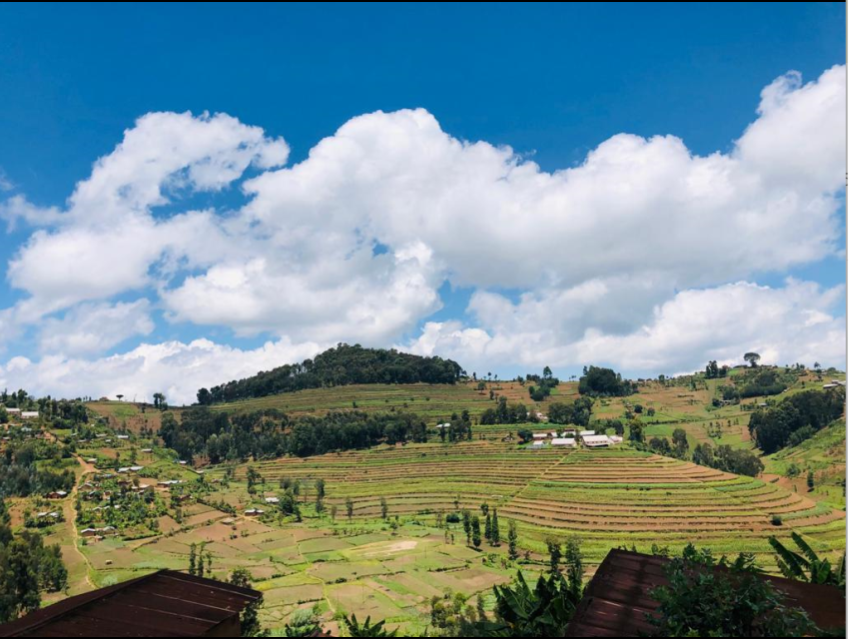
A tranquil picture of Masisi, North Kivu where some of our data collection took place. This is one of the territories most deeply affected by the ongoing armed conflict in DRC, its serene beauty belying the turbulent reality its inhabitants face. (Photo and words by Rosine Bigirinama and the Université Catholique de Bukavu colleagues)
What did you find most striking about your results? How will this research be used?
What stood out most was that stakeholders in conflict-affected settings are not only aware of the challenge of high maternal and newborn mortality but also have policies in place to strengthen health systems and respond to the challenge. What differs across settings is how politics shape each context – from legislating a health state of emergency in Nigeria to riding the universal health coverage wave in DRC. Across all four countries, there is an underlying willingness to act, but our research also highlights how power dynamics, fragmented programs, and institutional instability often limit the effectiveness of these efforts.
The research will be used to inform and expand global discourse on acting politically for health challenges in humanitarian settings. It will help humanitarian actors, researchers, and governments to consider not only technical interventions but also the sustainability of the less tangible components of the system, which affect how it works. We are already engaging in the Ministries of Health and other national and global stakeholders through dissemination and validation workshops to foster dialogue and co-develop context- appropriate recommendations based on our research.
What further research questions need to be addressed in this area?
Several important questions remain, like the question of power relations between governments and the health partners, many of whom larger international organizations. These power relations affect how resources are distributed, the sustainability of health programs, and how well coordinated health response are in fragile settings. Future research could explore different models for diversifying partnerships, increasing government ownership and localizing decision making in humanitarian settings, taking into consideration issues like competing priorities during times of crisis and high turnover of government personnel.
Another area of possible research is on the engagement of civil society. We still know little about the most effective ways for humanitarian organizations to engage these local actors, especially to advance MNH goals. The contexts where these studies were conducted are also dynamic and complex, and thus it is important to conduct similar research in a few years to capture the evolving ideas and factors shaping MNH trends.
Why did you choose PLOS Global Public Health as a venue for your article?
We were drawn to the freshness of perspectives in PLOS Global Public Health, largely due to its diverse makeup of editors, contributors and audience. Having engaged with other research published from PLOS Global Public Health in the past, we wanted to be a part of those global health conversations around local and international factors shaping policies. We also valued the journal’s flexible submission guidelines, which allowed us to explore complex ideas with the depth they required while maintaining clarity for a broad audience.
.