
In this Behind the Paper post, Miyako Otsuka, Mio Kato, Takaji Wakita and Tomoya Saito discuss their PLOS Global Public Health article…
Trump Didn’t Break the Multilateral System. He Exposed Its Fragility

Image credit
https://commons.wikimedia.org/wiki/File:Logo_of_the_World_Health_Organization.jpg
By guest contributor Tania Cernuschi
This month marks the anniversary of Donald Trump’s decision to withdraw the United States from the World Health Organization (WHO). A year ago, my reflex was simple: I put up my index finger and asked people to unite, condemn the recklessness, defend multilateralism.
Within days, thousands of people around the world responded — voicing support, donating what they could, whether pocket change or a month’s salary.
It was moving. It was generous. And it was dramatically insufficient.
A year later, I am no longer inside the system I was defending. Like thousands of others, I was made redundant in an effort to reduce costs. I now advise emerging pharmaceutical companies seeking to reach lower-income markets — a more direct way to advance access to health technologies, my expertise and passion.
As I support former colleagues navigating their own transitions — in the surreal moment of cancelled blue passports and forced relocations — I am forced to look at my own with greater honesty. Did I fall out of the UN system, or did I step out of it?
I knew exactly how to stay: procedures, complaints, months of administrative steps, waiting for a vast machine to slowly correct itself. I had just lived through a similar process for two years — a needless investigation that consumed time and resources, ultimately cleared me, and revealed something deeper: a system that, in the name of integrity, increasingly operates through fear rather than judgment, process rather than courage.
When my redundancy letter came, I accepted an uncomfortable truth: staying would have meant surrendering ambition. And I was not ready to stop fighting.
A year on, I believe my reaction to Trump’s withdrawal was necessary. But I now see it was incomplete. Trump did not mobilize tens of millions of voters and fans because he misunderstood the world. He mobilized them because the world many of us are defending no longer matches the one people are experiencing.
Trump operates without euphemism. He speaks of leverage, power, and deals. No diplomatic liturgy. No moral gloss. That bluntness — however crude and however flawed the values behind it — resonates at a moment when institutional language has become increasingly detached from visible outcomes.
Meanwhile, much of what presents itself as the progressive or multilateral establishment remains entrenched in deeply unequal systems that struggle to meet basic human needs, even as they multiply increasingly detailed rights frameworks that are often difficult to understand and largely declaratory.
So we engage in never-ending debates about replacing “pregnant women” with “pregnant persons,” as if naming biological reality had itself become a political transgression. The intention may be inclusion. The effect, for many, is erasure and loss of trust — a sense that ordinary human identity is being abstracted out of existence, while progress on maternal health remains painfully inadequate.
In our institutional self-absorption, we ritualistically invoke “inclusiveness,” “stakeholder dialogue,” and “sustainable frameworks,” while quietly accepting that global public goods are largely financed by a handful of donors — some not even democratically accountable — whose earmarks leave UN institutions financially fragile, structurally overloaded, and politically constrained.
Real reform does not begin with vocabulary. It begins with power and money. In May 2022, WHO member states agreed to significantly increase assessed contributions — a long-overdue step toward restoring institutional sovereignty. These are the kinds of reforms that truly matter. The next step is just as necessary: as core financing rises, mandates must narrow. WHO — and the UN more broadly — must be brought back to their essentials.
A proposal from the Center for Global Development captured this clearly, arguing for a “lean World Health Organization for the global good,” focused on its “irreplaceable core mission” — global leadership, global health security, and the production of global public goods — while stepping back from diffuse operational roles that dilute impact. The point is not to weaken WHO, but to clarify it.
When I tried to mobilize citizens in support of WHO last January, I realized how far that clarity has already been lost. Most people could not explain what WHO actually does. Many had never heard of it before COVID-19. They did not know that WHO draws on the latest science to shape the air they breathe, the medicines they take, the food standards that protect their children. An institution essential to everyday survival has become institutionally invisible.
This erosion of meaning did not begin with Trump. He simply weaponized it.
His attack on WHO was irresponsible. But the anger it tapped into — the sense that global institutions are bloated, opaque, insulated, and oddly theatrical — did not originate in Trump’s White House.
When Trump recently announced plans to withdraw the United States from dozens of international bodies, I looked at the list and imagined readers divided in two: those who had never heard of most of these agencies, and those inside the system who knew them well enough to recognize the overlapping mandates, the institutional duplication, the quiet competition for relevance.
A flood of outraged posts and messages filled my phone. Yet, if we are honest, we know this system incentivizes multiplication rather than prioritization. And that multiplication has become increasingly disconnected from concrete improvements in people’s lives.
A few days ago in Davos, Canadian Prime Minister Mark Carney said it plainly: “We know the old order is not coming back. We shouldn’t mourn it. Nostalgia is not a strategy.” He is right. The question is not how to restore an immaculate multilateral past. It is how to profoundly reform institutions, so they deserve the future.
As the US flag is lowered at WHO, it still feels as though we are absorbing the shock rather than using it. Managing the disruption, rather than transforming it into the kind of reckoning genuine reform would require.
And this is not the task of someone else. It is ours. In whatever role we occupy — citizens, UN employees, donors, academics, or heads of state. Carney reminded us institutions persist “through the participation of ordinary people in rituals they privately know to be false.”
Trump did not break the multilateral system. He exposed the distance between what it says and what it does. If we want fewer Trumps, we will need fewer illusions — and far more courage about what is no longer working. That work belongs to all of us.
About the author
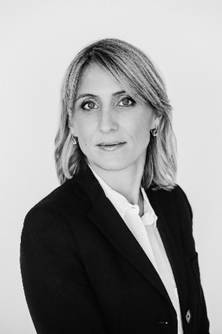
Tania Cernuschi is a board-level advisor in global health. After more than twenty years working across global health systems and international public affairs — including senior leadership roles at the World Health Organization — she now advises pharmaceutical companies and public organizations on access to health technologies, regulatory strategy, and institutional partnerships. Alongside her advisory work, she writes and develops creative projects exploring human experience, identity, and social systems.