
By guest contributor Amar Saeed As a medical student, I took up a project where I surveyed people diagnosed and living with…
Behind the paper: Health systems collaboration can strengthen climate change resilience: Insights from Indigenous knowledges in the Latin American region
In this post, author Carol Zavaleta-Cortijo reflects on the process of the newly published PLOS Global Public Health Essay, Health systems collaboration can strengthen climate change resilience: Insights from Indigenous knowledges in the Latin American region
what brought me to write this essay
Climate change is creating new and compounding health risks, increasing the frequency and severity of extreme events and affecting not only people, but also animals, plants, and ways of life. Yet, in many global policy discussions, the responses of Indigenous knowledge systems remain overlooked.
the beginning: my first patients
My first patients were Indigenous patients in the Peruvian Amazon. When I spoke with them, they told me they had visited “médicos” (traditional healers) to treat their illness. At that time, I knew very little about these médicos; I was told they had not gone to medical school, and in many cases had not even attended formal education. I became curious, but I could not find much information about them in written sources.
My colleagues explained that these were traditional healers and that they should not be trusted because they did not practice scientific medicine. I accepted this at first, but I felt something was missing. These healers existed, and patients trusted them. There was a disagreement between hospital-based doctors and traditional healers, but I did not fully understand it.
This question stayed with me, and later, when I worked at the Ministry of Health, I organised a workshop to learn more about Indigenous medicine, focusing on sexually transmitted diseases, including HIV. This was a public health concern, but also a community concern. During the workshop, I learned that traditional healers often hid their practice because they could face legal consequences. Despite initial distrust, around 12 healers attended because they wanted to learn about HIV and how to support their patients.
This experience was a turning point for me. I began to understand how they saw prevention—not only as a biological process, but as protection of the household and the community. They described building fences around their homes or elevating their houses to prevent animals and harmful entities from entering and bringing illness. They also spoke about medicines such as ayahuasca, while recognising that some diseases, like HIV, came from outside and required different forms of treatment.
Through these experiences, I realised that we, as hospital-based doctors, knew very little about Indigenous practices—not only for healing, but also for prevention and the promotion of health. At the same time, I saw how mistrust existed from both sides. One of my patients, who accessed a high level of hospital care, chose to leave early- discharge against medical advice- because he feared that his organs could be taken if he died in the hospital, and he preferred to die in his community. This moment made me realise how health systems can be blind to patients’ perceptions and fears.
where I stand: between worlds
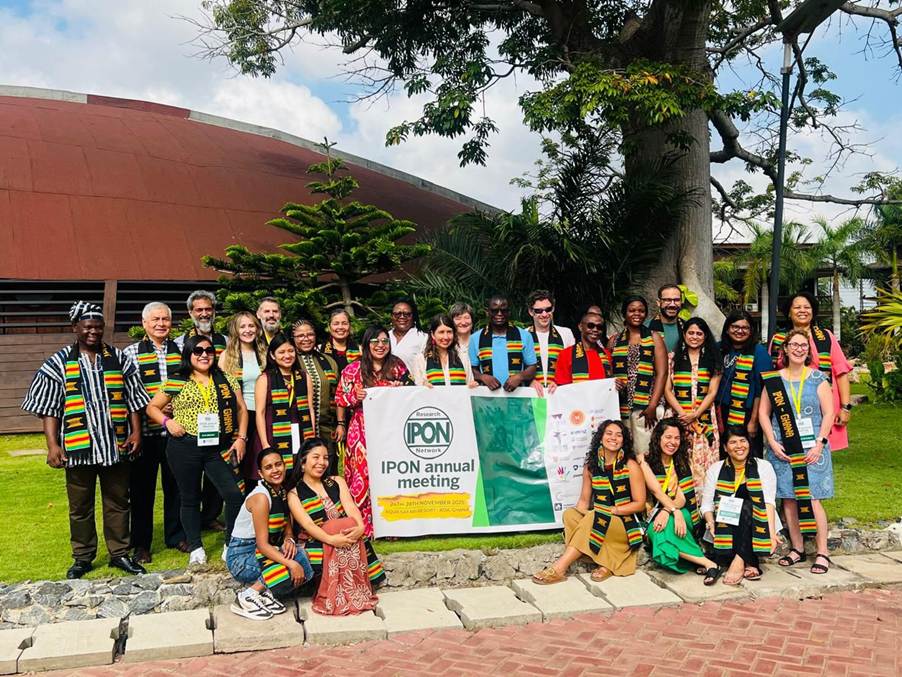
This is also personal. My mother and grandparents used ancestral practices to care for children and adults. These forms of care were not part of my formal education, yet they were part of my everyday life. Later, when I lived in Bolivia, I saw that ancestral medicine was not seen as complementary, but as foundational. Biomedicine was one part of a broader system of health. I also remember a moment during the Permanent Forum on Indigenous Peoples, when a wise elder woman from Central America shared her concern that younger generations leave their communities for education and do not return. In this process, knowledge is lost. But hope is also lost.
These experiences made me reflect on my own position. I move between worlds. I am connected to Indigenous knowledge systems through my family and my patients, and at the same time I work within biomedical and scientific knowledge systems. I feel both an insider and an outsider.
why I write this essay
I wrote this essay because I feel a responsibility to share what I have learned over more than 20 years working as a physician and researcher. I feel a responsibility to speak what is often left unsaid: Indigenous medicine is alive. It is not ignorance, it is not pseudoscience, and it is not witchcraft. These systems continue because people trust them and use them in their everyday lives. In the essay, I also used a familiar WHO policy framework to draw parallels between conventional understandings of health systems and what I have learned about Indigenous health systems, which is also increasingly reflected in the literature.
I wrote this essay from a learning position, where I am becoming increasingly familiar with the physical science of climate change(1). Climate change is already with us, and we need to act with urgency. For the Latin America region, It is projected that mean temperatures will increase between 2–6 °C by the end of the century, cold spells will decrease in frequency, and drought conditions will increase in the Amazon region(1). At the same time, glacier volume loss and permafrost thawing will continue in the Andes cordillera, and along the coasts, sea level rise will also continue(1).
Another reason for writing this essay is to make accessible knowledge that is often transmitted orally. In global assessments, there is still resistance to working with Indigenous knowledge, partly because it is not always documented in peer-reviewed formats. I remember someone in an international meeting asking me what Indigenous peoples can teach us about adapting to climate change. This question stayed with me. I chose to believe that the willingness to learn is there, but the knowledge is not always available in accessible formats. Figure 1 shows images taken by Shawi fathers showing how they prepared a treatment to cure diarrhoea in children. These were part of a previous photo voice research about food security and climate change(2). Photovoice is a useful method in transmitting knowledge related to Indigenous health.

Figure 1. Key Foods and Conditions for Getting Food. Pictures taken by Shawi Indigenus fathers in the Peruvian Amazon as part of a photo voice project(2).
what I want to see: collaboration as an action
In this essay, I have focused on describing how we can make Latin American health systems more resilient through collaboration across Indigenous and non-Indigenous health systems. I propose that we can do this by using the “stones” we already have: our own medicine and Indigenous knowledge. From here, we can begin collaboration.
Collaboration needs to be actionable, and policies are one way through which we can implement this collaboration as an adaptation to climate change in health. This essay is one small contribution to motivating this collaboration to happen. It is an invitation to see health systems from an Indigenous perspective, where actions are born from our mind, our hearth and our spirit.
About the author:
Carol Zavaleta is the Co-Chair of the Indigenous Peoples Observatory Network where Indigenous and non-Indigenous researchers, decision-makers, NGOs, and community members have come together to better understand and respond to threats facing Indigenous communities globally, building resilience to manage global change.